
Biochemistry E-Portfolio 2026

The Cellular Blueprint

Jake C. Ardenio

Registered Medical Technologist RMT

Towards an exciting exploration of how chemical processes drive the machinery of living organisms.

Enter the blueprint
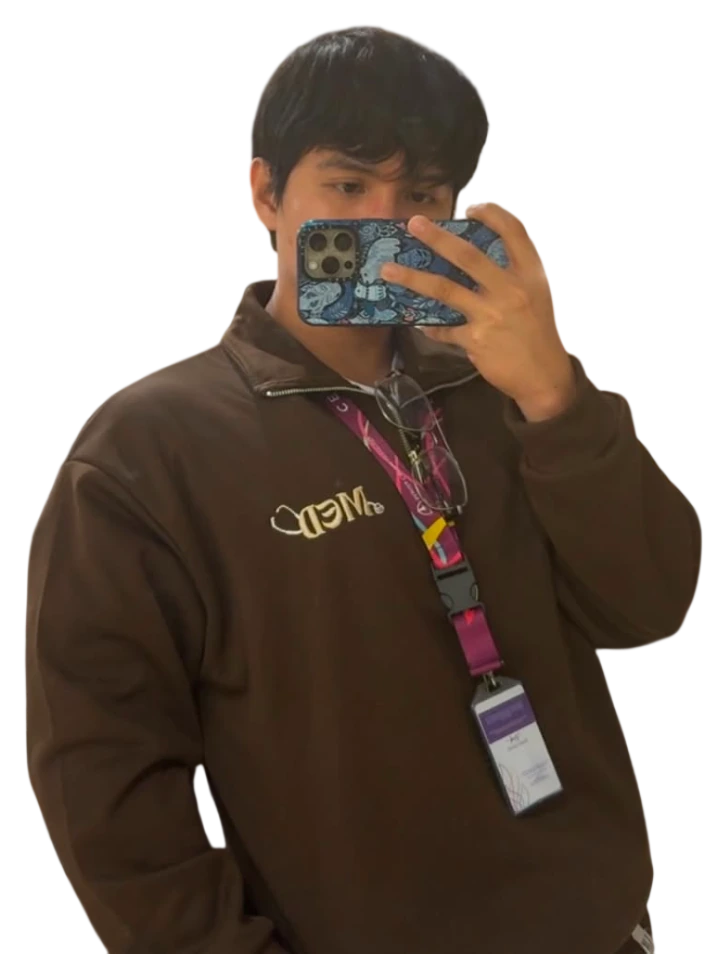
Jake in a brown jacket, representing his everyday identity Jake in a barong, representing his professional identity
September 05, 2026 Manila Central University College of Medicine
Biochemistry and Medicine Water and pH Amino Acids and Peptides All About Proteins All About Enzymes Preliminary Biochem Integration
01

Preface

Adjustment is not an option but a necessity

Medicine life
hits me.

Entering medical school felt like finally stepping into a dream I had been looking forward to for so long.

During the first few days, there was excitement, curiosity, and that feeling of finally being able to say, “I’m a medical student.” But it did not take long before reality started to hit. Suddenly, there were lectures to understand, readings to finish, activities to submit, practicals to prepare for, and quizzes that seemed to come one after another. It was only a month or two, yet it already felt like there was never enough time to do everything.

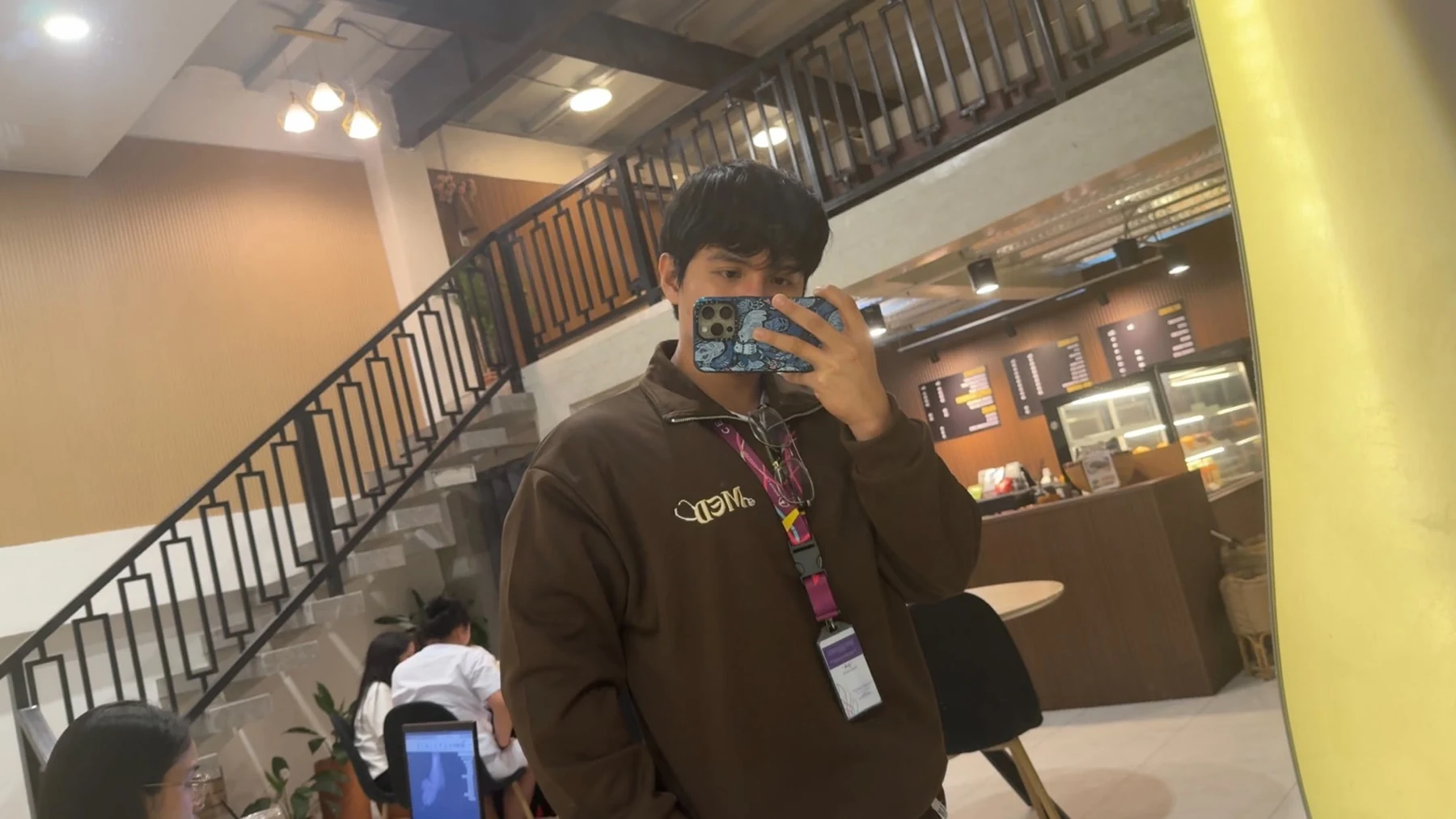
Jake taking a mirror photo on campus

Going out of the bubble

Surprise.
This is your life now.

I entered the week excited and optimistic, thinking, “Okay, Biochem... chemistry of life. Sounds manageable.” Then suddenly we were talking about atoms, bonds, biomolecules, metabolism, water, pH, buffers, and calculations. Apparently, even water was no longer just water. It had polarity, hydrogen bonds, a dielectric constant, and somehow became part of a math problem.

While I was still trying to understand what happened to H+ and OH-, activities and lectures from other subjects were already piling up. Medical school was definitely not going to adjust to my pace.

I had to leave behind the study habits and comfort I was used to. I accepted that I would not understand everything on the first try. Sometimes I had to reread, ask questions, watch explanations, and stare at the same equation until it finally made sense.

Going out of the bubble does not mean having everything figured out. It means being willing to struggle, adjust, and keep going.

My first few months of Biochemistry were overwhelming, slightly traumatizing, but also humbling. And somehow, I survived. Barely, but it still counts.

02

Learning days

Learn Reflect Apply Integrate

Notes from the
cellular level.

These entries follow the topics I encountered in Biochemistry, from learning unfamiliar concepts and reflecting on them to applying them through activities and integrating them into life and medicine.

01

First Biochemistry Meeting

Expectation of what I knew vs. the reality of what I really knew

Before

I thought it was another chemistry subject with complicated formulas that I would somehow have to survive. Genomics sounded like something for scientists in laboratories, and water was simply water. Very innocent. Very harmless.

Now

Chapters 1 and 2 showed me that Biochemistry is everywhere. Studying molecules branches into genomics, proteomics, metabolomics, and personalized medicine. Water is no longer “just water.” When I see oil and water separate, my brain now says, “hydrophobic effect, ordered water cages.”

Understanding these ideas helps me explain how molecules behave in the body, from cell membranes and proteins to future applications in genomics and personalized medicine.

02

Amino Acids Essential Building Blocks of Life

The PVT. TIM HALL of it all

Before

Amino acids were tiny words I knew were somehow related to protein. Honestly, “protein equals pang-gym” was the extent of it.

Now

I understand that amino acids are the building blocks of proteins and that their sequence helps determine every level of structure. Essential amino acids must come from the diet, so PVT. TIM HALL is now permanently enlisted in my brain, together with my friend Julianna. Hahah.

Even a single change in sequence can alter protein function, such as the replacement of glutamate by valine in sickle cell disease. Small amino acid, big responsibility.

03

Proteins Determination of Primary Structure

This is where complicated things started

Before

Proteins were just chains of amino acids, and chromatography was science people separating colorful things in tubes.

Now

I understand how proteins become more complex from primary to secondary, tertiary, and quaternary structure through assembly, folding, packing, and interaction. Proteins can be separated according to size, charge, hydrophobicity, or specific binding.

These techniques are useful for studying proteins, identifying biomarkers, and purifying therapeutic proteins such as insulin and antibodies. Biochemistry said: build the protein, fold the protein, then make me separate the protein.

04

Proteins Higher-Order Structure

When long chains come to life

Before

I thought proteins folded however they wanted. I had no idea they had actual rules and angles to follow. Very strict pala sila.

Now

I understand the structural levels and the importance of hydrogen bonds, hydrophobic interactions, salt bridges, and disulfide bonds. The Ramachandran plot showed me that phi and psi angles have allowed and disallowed positions because of steric hindrance.

Proper folding matters because abnormal folding can contribute to diseases such as prion disorders and Alzheimer’s disease. Proteins cannot simply freestyle their way into becoming functional.

05

3D Virtual Laboratory Simulations

Introduction of Labster to Biochemistry

Labster is especially helpful when a laboratory activity requires intensive materials or technology. I used the platform during my pre-medicine course, so the application was already familiar. Returning to it in Biochemistry gave me another way to visualize processes that would otherwise remain abstract.

06

Assessment of Chapters 3 and 4

Gauging what I learned, testing my capacity

Before the quizzes, I was nervous because amino acids, protein structure, and purification techniques felt like too many ideas fighting for space in my brain. After studying and taking them, I realized I understood more than I thought. I connected amino acids to proteins and remembered peptide bonds, structural levels, and chromatography. Most importantly, I passed both quizzes.

Passing gave me confidence that my study methods were slowly working. I did not need to know everything perfectly. I needed to understand the important ideas and build from there. From PVT. TIM HALL to chromatography, somehow my brain survived and passed.

07

Hemoglobin and Myoglobin Online Discussion

The biochemistry of oxygen binding

Before

Hemoglobin was simply “the thing that carries oxygen.” I did not expect one amino acid change to cause this much drama.

Now

I understand how hemoglobin and myoglobin bind oxygen differently and how cooperative binding gives hemoglobin its sigmoidal dissociation curve. In sickle cell disease, Glu6 is replaced by Val, producing a hydrophobic sticky patch that promotes HbS polymerization.

This topic holds a special place in my heart. As a medical technologist, I have known hemoglobin and myoglobin for years. Learning the details that make them special connected amino acid sequence, protein structure, oxygen delivery, red blood cell function, and actual disease. One tiny amino acid changed an RBC’s whole career.

08

All About Enzymes

The cellular accelerators that drive life

Before

Enzymes were simply things that sped up reactions. I did not know they had this much personality. They are choosy, measurable, and can be switched on and off.

Now

I understand substrate specificity, how activity and reaction rates are measured, and how the body regulates enzymes. They accelerate reactions without changing equilibrium, while some remain inactive as zymogens until needed.

Right enzyme, right substrate, right speed, right time. Enzymes are productive, but apparently even they need boundaries and proper timing.

03

Milestones

Pressure, pause, proof

The semester did not
move in a straight line.

01

Suspension here and there

Classes paused.
Backlogs did not.

The suspensions honestly felt like little blessings at first. Every announcement made me think, “Yes! Walang pasok, extra study time!” But somehow, the extra time disappeared while the backlogs stayed.

As prelims approached, lectures, activities, reviews, and exams felt compressed into the same space. My planner became more of a suggestion than a schedule. I learned to reorganize, study whenever I could, and keep moving. Puwedeng suspended ang classes, pero never talaga ang deadlines and backlogs.

02

110-item long examination Chapters 1 to 6

From doubt
to a top score.

Reviewing water and pH, amino acids, protein structure, purification, folding, hemoglobin, and myoglobin all at once made me question whether my brain had any storage left. I would finish one chapter, feel productive for five minutes, then remember that five more were waiting.

Still, the rereading, practice questions, and effort to connect one chapter to another paid off. I entered the exam hoping to survive and earn a decent score. Finding out that I became one of the top scorers felt unreal.

From doubting myself to becoming one of the top scorers in the Long Examination.

Apparently, all the moments of “Ano ba ’to?”, staring at diagrams, and negotiating with myself to study one more topic actually worked. Character development, I guess.

04

Evidence of learning

The Art of Questioning

A clinical conversation
begins with listening.

As a first-year medical student, I realized that asking questions is not just about collecting information. It is about making the patient comfortable enough to tell their story. Open-ended questions, attentive listening, patient participation, clarity, respect, and professionalism all shape the quality of a history.

Medicine does not always begin with knowing the right answer. Sometimes, it begins with knowing the right question and actually listening to the response. Asking ten questions in rapid-fire mode is not a conversation. Hindi interrogation ang history taking. Practicing early helps me build confidence, empathy, and better patient rapport for the day I begin facing real patients.

Task brief Open-ended questions in history taking
02:12The Art of QuestioningPerformance, learning, and the candid moments behind the polished take.
05

Visual atlas

Every diagram, checkpoint, and reference

The evidence behind
the entries.

This atlas gathers the visuals that shaped my preliminary Biochemistry experience. Select a category, then open any card to examine it at full size.

06

Prelim reflection

Welcome to Medicine

“Storage full.
Please delete some files.”

Prelims felt like my first real “Welcome to Medicine” moment. I entered medical school believing that if I studied hard enough, everything would eventually make sense. Then the exams came, and suddenly I was trying to remember concepts from different subjects while my brain issued a storage warning.

There were productive days and days when I studied for hours only to ask, “May pumasok ba talaga sa utak ko?” I struggled with the amount of information, the lack of time, and the pressure to do well. Sometimes I felt behind, especially when everyone else appeared to understand faster. I kept reminding myself: “I may not be the smartest in the room, but at least I’m already in the room.”

Surviving medicine is not always about understanding everything on the first try. Sometimes it means showing up tired, confused, slightly caffeinated, and still choosing to study one more topic. Kahit sabog na, laban pa rin.

When the examinations ended, I felt more relieved than victorious. I did not master everything, but I made it through something I once thought I could not handle. That alone felt like progress.

Growth begins outside the comfort zone, and prelims pushed me far outside mine. It was exhausting, humbling, and occasionally traumatic, pero kinaya naman pala.

I do not have to know everything to move forward. I only have to understand what I can, learn from what I missed, and keep going.

Prelims: survived.
Sanity: questionable.
Motivation: still loading. 😭